
Property decisions become expensive when the legal detail is treated as an afterthought. The Leasehold and Freehold Reform Act 2024 received Royal Assent and legislation updates continue to be tracked officially. Why this matters Reform changes expectations and decision-making for leaseholders, landlords, and market participants. That means your assumptions from “last year’s deal” may no longer be safe. What usually goes wrong People get caught because: The practical checklist If you want this coordinated properly, book a consultation. We help structure the plan and connect you with the right legal specialists through our panel.

UK VC Is Still Investing, But Founders Must Be Sharper Than Ever
Most startups don’t fail because the idea is bad. They fail because cash and sequencing are misunderstood. The British Business Bank continues to publish research on UK venture capital and equity markets, including its VC-focused reporting. What’s happening in the market Investors are still deploying capital, but they are demanding clearer evidence: pricing logic, unit economics, and execution control. What usually goes wrong for founders Fundraising breaks down when: The founder funding checklist If you’re preparing to launch or raise, book a consultation. We help you structure the plan, tighten the pack, and coordinate the right introductions.
UK fraud losses protection checklist
Leadership hiring rarely fails because people are unavailable. It fails because businesses wait until pressure forces a rushed appointment. The ONS continues to publish detailed labour market indicators covering employment, unemployment, earnings and vacancies. What the market is telling you When conditions change, you see it first in vacancies, wage pressure, and role design. The winners adjust early and hire intentionally. What usually goes wrong Boards lose momentum when: The leadership planning checklist If you want to hire with precision, book a consultation. We help define the role, structure the search, and coordinate introductions to high-calibre leadership.

£1.17bn Lost to Fraud: Why Protection Planning Now Includes Digital Risk
Fraud is no longer a rare event. UK Finance reported £1.17 billion lost to fraud in 2023, and the trend has forced the market to rethink prevention and reimbursement. What’s happening Fraud techniques are scaling, and when reimbursement disputes occur, the time-cost to businesses and individuals can be severe. Recent reporting has highlighted ongoing tensions around fraud refunds and complaint outcomes. What usually goes wrong Organisations suffer because: The protection checklist leaders use If you want a structured protection review, book a consultation. We help you map the risk, strengthen controls, and coordinate the right specialist support.

Making Tax Digital Starts April 2026: The Quiet Change That Breaks Unprepared Businesses
Compliance changes rarely hurt because they are complicated. They hurt because they arrive while you are busy – and then you scramble. HMRC has confirmed that Making Tax Digital for Income Tax starts in April 2026 for sole traders and landlords with qualifying income over £50,000, with phased expansion after that. What’s changing Digital record keeping and compatible software are becoming non-negotiable for affected taxpayers. What usually goes wrong The most common failure points are simple: The readiness checklist If you want this handled professionally, book a consultation. We help you set the system, tighten reporting, and keep everything audit-ready.

Companies House Is Changing the Rules: Identity Checks and New Fees Are a Wake-Up Call
Most companies only think about compliance when something goes wrong. That’s exactly why the new Companies House changes matter: they reward businesses that stay ready, and they punish those that drift. Companies House has confirmed changes to fees (effective 1 February 2026) and the wider reform programme includes identity verification requirements under the Economic Crime and Corporate Transparency Act. What’s changing The direction is clear: more verification, cleaner registers, and less tolerance for sloppy filings. What usually goes wrong Companies get caught out because: The clean, professional response If you want this handled properly, book a consultation. We’ll structure the compliance plan, prepare what’s needed, and keep your corporate records investment-grade.

The Pound Moved on a “Hold”: Why FX Risk Is a Board Level Issue
Foreign exchange is the world’s largest market measured in trillions per day and that scale is exactly why even small shifts can hit margins fast. The BIS is the global reference point for FX market size and structure. Why the pound can move even when rates don’t When the Bank of England held rates at 3.75% in a close vote, markets adjusted expectations and the pound reacted.FX moves on expectations, not headlines. The risk most companies fail to measure These are the exposures that quietly compound: The CFO/Founder checklist for FX control If you want disciplined FX planning without noise, book a consultation. We help you clarify exposure, design the plan, and coordinate execution with the right partners.

Stamp Duty Still Shapes Deal Viability: A Practical Checklist Before You Buy
Most investors don’t lose money because they pick the wrong property. They lose money because the numbers were never stress-tested after taxes and fees. Stamp Duty Land Tax rules are clear, but the consequences are often underestimated. Why this matters right now Stamp duty is a cash cost that hits at completion. That means it affects: your deposit, your liquidity buffer, and your ability to survive voids or refurb overruns. What usually goes wrong We repeatedly see buyers commit before they have clarity on: The pre-offer checklist serious investors use Before you submit an offer: If you want a deal to pass a lender’s lens and your own, book a consultation. We help you structure the plan, prepare the pack, and coordinate the funding route.
Bank Rate Held at 3.75%: What It Changes for Funding, Covenants, and Timing
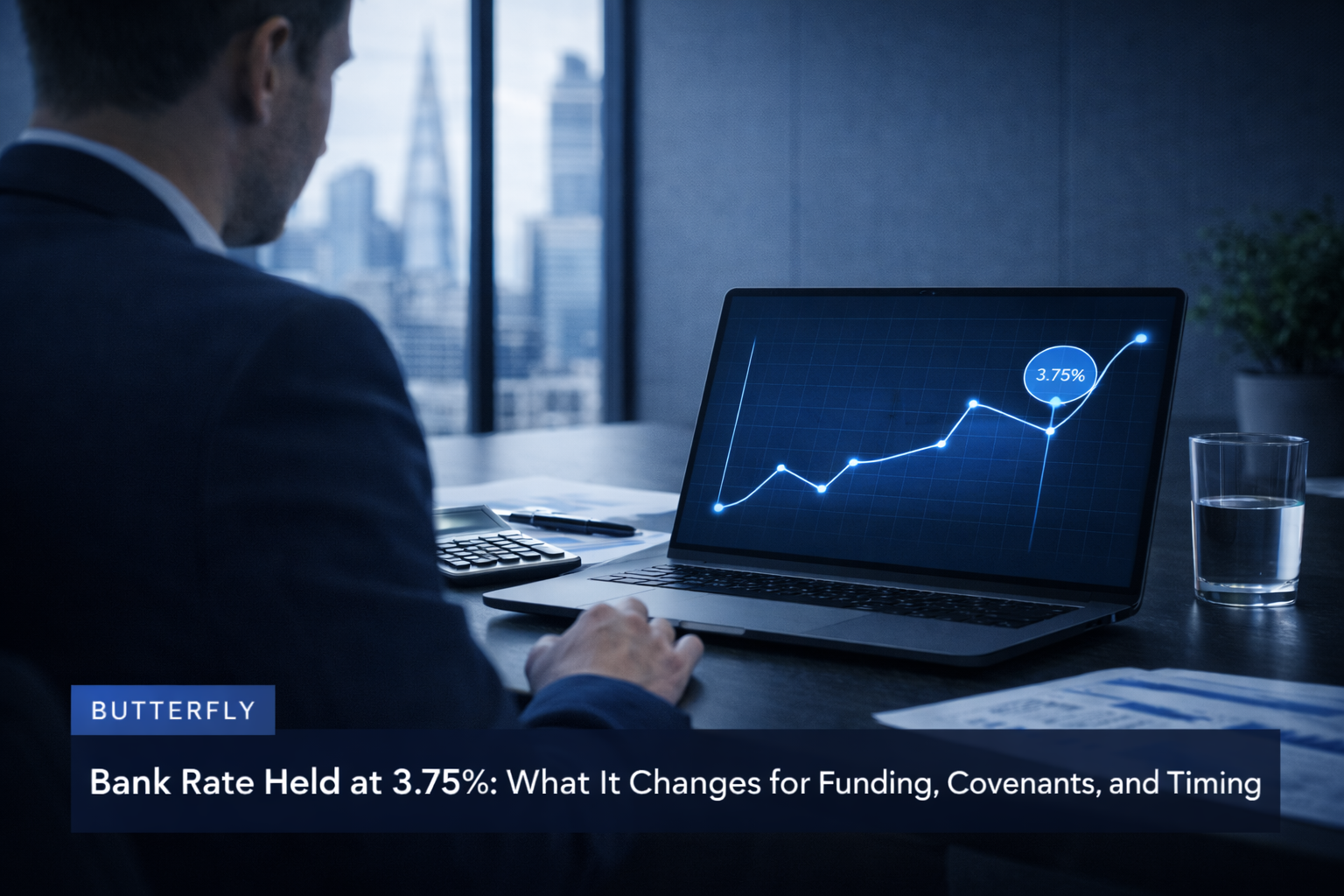
When the Bank of England holds rates, the real impact shows up in lender behaviour not just headline pricing. On 5 February 2026, the Bank of England held Bank Rate at 3.75%. The real story behind the headline A hold after a period of cuts is a message: lenders remain selective, underwriting stays tight, and “good deals” concentrate around well-prepared borrowers. What usually goes wrong for borrowers Funding processes fail more often because of preparation than pricing: The moves that improve outcomes now If you expect to borrow, refinance, or restructure this year: If you want the fastest route to “yes”, book a consultation. We’ll map the route, prepare the materials, and coordinate introductions to the right funding partners.

UK Insolvencies Are Rising Again: The Early Warning Signs Leaders Miss
In October 2025, 2,029 companies in England and Wales entered insolvency, which was 17% higher than the same month the year before. That number isn’t just a headline, it’s a signal that the margin for error is shrinking. What happened, and why it matters Insolvencies tend to rise when three pressures stack up at the same time: tighter cashflow, higher operating costs, and slower decision cycles. Many leadership teams feel the strain before they can prove it in management accounts. The risk is not “going bust overnight”. The risk is losing options quietly: supplier confidence, lender appetite, staff stability, and buyer interest. The warning signs most boards miss These are the patterns we see before stress becomes visible to the market: What to do in the next 14 days If you’re feeling pressure, the goal is not panic it’s control: If you want a structured turnaround plan that protects credibility while you stabilise the numbers, book a consultation. We’ll help you establish the sequence, prepare the pack, and run the process with calm control.